Green is not just the color of money, it is the color of social-responsibility

Sunday, November 7, 2010

Netherlands is First Country to Commit to Using only Sustainable Palm Oil

Although a host of food and consumer product manufacturers have committed to using only sustainable palm oil over the past few years, The Netherlands is the first country to make this commitment thanks to the pledge of all palm oil suppliers and buyers in the Dutch market.

By the end of 2015, all palm oil in The Netherlands will be sustainable, as certified by the Roundtable on Sustainable Palm Oil (RSPO). Suppliers and buyers made the pledge as part of the Dutch Taskforce Sustainable Palm Oil. The task force was initiated by the Dutch Product Board for Margarine, Fats and Oils (MVO), which also participates in the global RSPO.

Task Force participants include associations representing the Dutch refining industry, food manufacturing industry and feed industry, which represent a significant share of the Dutch palm oil market.

The ” Manifesto of the Task Force Sustainable Palm Oil” (PDF) details the group’s guiding principles and action plan to meet its commitment.

General Mills and Seventh Generation are two of some of the most recent companies to commit to responsible palm oil sourcing.

A number of food makers including Unilever, Nestle, Cadbury and Kraft and restaurants such as Burger King over the past year have moved to drop Sinar Mas as a supplier of their palm oil purchases due to claimed links to deforestation by Greenpeace. 
Courtesy of Environmental Leader


make your own solar panels


Join The Green Club


Green Business Network: Connect, Market, and Grow

Share

Saturday, November 6, 2010

Gore: Trinidad & Tobago can be Green Center of Caribbean

Al Gore, the 45th US Vice President says Trinidad and Tobago has an abundance of natural resources that would allow it to engage in alternative and renewable energy development as part of the country’s diversification and economic thrust, while assisting to reduce adverse environmental effects.

Gore, a Nobel Laureate and one of the world’s most influential voice on climate change, advised T&T that now is the time to maximize on these resources as the country’s major revenue earner gas and oil would not last.“You have unparalleled resources of sunlight and good wind resources and I know you also have cheap energy,” he said.

He added that since T&T was geographically located just a few kilometers from the world’s best supplier of pure silica, the country could take advantage of this proximity by purchasing the silica to create solar cells. Gore explained that T&T could gain the potential competitive advantage in the production of solar panels due to its manufacturing capabilities, low-cost energy environment and its strategic location.

He stated that the country had the potential of becoming the green center of the Caribbean and in the northern part of South America if it had the will to do so.“If you choose...you could create a centre for manufacturing, research and development for solar panels throughout the Caribbean and the northern part of South America creating new jobs...if you chose to do so, you can also become one of the country’s best known for wind power,” he said.

Gore was speaking on Thursday night on the topic of climate change titled “Thinking Green: Economic Strategy for the 21st Century” at the National Academy for the Performing Arts (NAPA).The event, hosted by the T&T Manufacturers Association, was aimed at providing practical guidance to the business community, Government and the population as to how they can make choices to save the earth, while stimulating sustainable economic growth by meaningful engagement in the pursuit of alternative energy.

This is his first visit to T&T and he complimented the country for being so dynamic. He also stated that he has never been in an auditorium as lovely as NAPA in the Caribbean and some countries in which he has spoken.

Gore said climate change presents a time of danger and opportunity and he said he believed that the world was entering an era of consequences but it was also a time to act. Blaming mankind for its own destruction, he said, “We continue to put 90 million tonnes of CO2 into the atmosphere and everyday it keeps growing.”

He said, according to scientists, this was contributing to the rise in sea level, increase in heat/drought and stronger hurricanes which have begun to result in the emergence of climate refugees. Gore called on Trinidad & Tobago to become a leader for change as it possessed the power and influence in the Caribbean to take that lead.

“We are facing a climate crisis that people would like to ignore. You are a leader of great influence and I want to recruit you...I need you,” he said. But being an advisor to leaders in the US Congress and global Heads of State, he was asked by a patron during the question and answer segment, why the US has not ratified the Kyoto Protocol, (which is an international agreement linked to the United Nations Framework Convention on Climate Change).

He said he was greatly disappointed in his country but would continue to do what he can to influence minds and change hearts because about 60 per cent of the US citizens supported the law while some independently embraced the protocol.   read full story


make your own solar panels


Join The Green Club


Green Business Network: Connect, Market, and Grow

Share

Friday, November 5, 2010

Levi’s ‘Green’ Jeans Cut Water Use Up to 96%

The Levi’s brand launched its new “Water-Less” jeans that are manufactured with significantly less water. The average pair of jeans uses 42 liters of water in the finishing process, says Levi’s; however, the new Water-Less collection reduces water consumption by an average of 28 percent and up to 96 percent for some new products in the line.


During the production process, a typical pair of jeans are “finished” in large washing machines and dryers to create a unique look and feel, says Levi’s. Using traditional garment washing methods, the average pair of jeans undergoes three to ten washing cycles.

By making some changes to the process, which includes combining multiple wet cycle processes into a single wet process, incorporating ozone processing into the garment washing and removing the water from the stone wash, the clothing manufacturer was able to substantially cut its water use.


The first collection of Water-Less products will be available in January 2011 and will include over a dozen classic Levi’s jeans, including the Levi’s 501 jeans and the 511 and 514 jeans, as well as the Levi’s trucker jacket.


The Levi’s spring 2011 product lines will contain more than 1.5 million pairs of jeans with the Water-Less method, saving approximately 16 million liters of water. The line will also include jeans made with the brand’s traditional rigid finish which inherently uses virtually no water in its production, according to the company.


The company plans to expand these finishing techniques to more global supplier factories for the fall 2011 collection.    
Courtesy of environmental LEADER


make your own solar panels


Join The Green Club


Green Business Network: Connect, Market, and Grow

Share

Wednesday, November 3, 2010

Nature Inn is first in park system to demonstrate Green Technologies

This September the Nature Inn at Bald Eagle State Park, the first facility of its type in Pennsylvania's state park system, opened its doors, offering visitors not only an up-close experience with nature, but an up-close experience with green technologies.

Energy and water conserving features of the 18,500-sq.ft. Nature Inn include a geothermal system to provide heating and cooling; solar collectors to heat water for showers and laundry; five rain barrels and four large cisterns to collect and harvest rainwater; and low-flow plumbing fixtures.

"As a southern entrance point to the 12-county Pennsylvania Wilds, this Nature Inn will welcome people to a region known for its wealth of state parks and forests and opportunities for wildlife watching and many other outdoor adventures," said Department of Conservation and Natural Resources (DCNR) Secretary John Quigley. "Along with offering a good night's rest, we also are demonstrating stewardship and conservation by connecting guests to outdoor activities in the park and showing them 'green' energy-efficient building features and how to collect and use rainwater."

Geothermal is first choice

The geothermal system is a closed-loop system consisting of 24 6-in. diameter vertical wells 300-ft. deep. The wells are divided into three groups of eight, located under the parking lot.

“The site selected is previously disturbed, and DCNR wanted to keep any disturbance of the surrounding woodland to a minimum, but the site is also long and narrow,” explained Michael Twigg, architectural supervisor of Pennsylvania’s DCNR Bureau of Facility Design and Construction. “DCNR has more than 20 geothermal systems at facilities around the state and the preferred location is generally an open field or yard, but for this project the selected location had to be beneath the parking lot.”

Geothermal was chosen for this project because past experience with geothermal heating and cooling has been successful for the DCNR.

According to Twigg, based on the performance of the geothermal systems at other locations, geothermal is generally DCNR’s first choice when constructing or upgrading major facilities.

The geothermal loop is connected to a Mitsubishi CITY MULTI Variable Refrigerant Flow (VRF) system, consisting of four WR2-Series water source heat pumps, four Branch Circuit (BC) refrigerant controllers, one connected with each of the heat pumps, and a variety of indoor units throughout the public and service areas of the Nature Inn.

“The VRF system provides several benefits including simultaneous heating and cooling, simple zoning, quiet operation, system simplicity, and a lower lifecycle cost,” said Twigg. “In addition, the VRF system allows for heat recovery of unneeded heat which can then be rerouted through the BC controller to areas of the building that need it without operation of the main compressor unit.”

Solar thermal system

A primary goal of the Nature Inn is to assist in delivering a message of resource conservation to the guests that visit the inn. Therefore, the solar thermal array for domestic hot water is located in a visible location — on a trellis above the doors directly from the main lobby where guests can see the panels.

“We thought that knowing that when you take a shower, or when your sheets and towels are laundered, part of the energy to heat the water was generated in a clean, fossil-fuel free manner was a powerful message,” said Twigg.

The solar thermal system is made of 80 vacuum tubes by Thermo Technologies. The tubes collect the sun’s heat, transferring it through a header manifold to a water loop. The water is then pumped to the hot water storage tank where the heat is transferred to the water stored in an 80-gal. Rheem solar water storage tank.

According to Jerry Plummer, vice president of K&K Plumbing Co., Johnstown, Pa., this was the first thermal system the company installed, and the installation went well.

“This took about two weeks,” said Plummer. “This project was unique since there are not a lot of these systems in the area.”

According to Twigg, the solar thermal system is estimated to meet roughly 50% of the annual hot water demand and save about 8,300 kWh of energy each year.

Water conservation
Besides having an up-close experience with solar thermal and geothermal systems, guests at the Nature Inn will also experience a water-conserving plumbing system and rainwater collection system. 

Low-flow plumbing fixtures in conjunction with the rainwater collection system is anticipated to reduce total building water use by almost 200,000 gallons per year, or more than 45% over a typical building, according to Twigg. 

Low-flow Symmons lavatory faucets and Moen showerheads are being utilized. Plus, EPA WaterSense-rated American Standard dual-flush toilets are used throughout the building, allowing guests to select the amount of water needed — either 1.6-gpf or 0.8-gpf.
“Besides the solar thermal system, the rainwater harvesting is unique to the building,” said Plummer. “This is the first rainwater harvesting system K&K Plumbing Co. installed, and it went smooth.” 

make your own solar panels


Join The Green Club


Green Business Network: Connect, Market, and Grow

Share

Monday, November 1, 2010

Green Awakening- Watch Video

Sister Janet Ryan is a believer in the sanctity of saving energy. She's also at the forefront of a new religious movement... one that believes God wants people to take care of the Earth.

She and her fellow Sister Servants of the Immaculate Heart of Mary live in a convent that's been retrofitted with a geothermal heat pump and has a gray water recycling pond that filters all bathing and dishwater. It's just one of a growing number of religious institutions across the U.S. that have been LEED certified by the U.S. Green Building Council.


In “God Goes Green,” Lee Patrick Sullivan talks to Sister Janet and others who are preaching the Gospel of environmental stewardship. It's not just a set of beliefs, but an actual book, the “Green Bible,” complete with a chapter by the spiritual leader of the Roman Catholic church, Pope Benedict XVI. And he looks at how other, non-Christian, religions, are discovering that being green is next to Godliness.
courtesy of  energynow


Watch Video


make your own solar panels


Join The Green Club


Green Business Network: Connect, Market, and Grow

Share

Seven Must-Ask Sustainability Report Questions

There are seven questions CEOs, boards and other executives should ask to understand how sustainability reporting impacts their organizations, according to a new report from Ernst & Young.

These questions will help organizations examine internal processes to collect and analyze non-financial data, which could help generate long-term benefits such as better measurement of the company’s “triple bottom line” performance, greater stakeholder trust, improved risk management, and increased operational efficiency, says the company.

The report, ” Sustainability reporting: Seven things CEOs and boards should ask,” finds with more than two-thirds of the Fortune Global 500 companies publishing some form of sustainability report, they are becoming more important as a way for them to achieve their business goals including cost cutting and improved efficiency, says Ernest & Young.

In addition, sustainability reporting has become a tool for companies to report on their non-financial data, which is increasingly demanded by employees, analysts, customers and other stakeholders.

Case-in-point: A mid-2010 Ernst & Young survey of 300 global executives at large corporations revealed that 43 percent believe equity analysts consider factors related to climate change when valuing a company.

The Federal Trade Commission (FTC) recently proposed several revisions to its “Green Guides,” including new guidance on marketers’ use of product certifications and seals of approval, as well as claims for renewable energy, renewable materials, and carbon offsets.

Ernst & Young says reporting on “green” product development will provide companies with the opportunity to document the basis for any claims they make. It also will help them collect environmental information about their products as their customers develop supplier sustainability initiatives.

The seven questions discussed in the new report include:

–Who issues sustainability reports?

–Why report on sustainability if you don’t have to?

–What information should a sustainability report contain?

–What governance, systems and processes are needed to report on sustainability?

–Do sustainability reports have to be audited?

–What are the challenges and risks of reporting?

–How can companies get the most value out of sustainability reporting?
Source: Environmental Leader

make your own solar panels


Join The Green Club


Green Business Network: Connect, Market, and Grow

Share

Sunday, October 31, 2010

FedEx Opens Solar-Powered Hub at Cologne Bonn Airport

FedEx has opened the company’s second FedEx Express solar-powered hub at the Cologne Bonn Airport and its fifth solar facility in operation. FedEx broke ground on the new Central and Eastern Europe in 2008.

FedEx says the Cologne hub is one of its most modern hubs in the world. The roof features the largest FedEx Express solar power installation worldwide and represents one of the largest rooftop solar installations in North Rhine-Westphalia, with an area of 16,000 square meters, producing about 800,000 kilowatt hours per year.

In April, FedEx unveiled its 2.42 megawatt solar installation across 3.3 acres of rooftop space at the FedEx Ground Woodbridge distribution hub in New Jersey. It’s claimed as the largest solar installation in the country. The installation will meet about 30 percent of the facilities energy needs.

Including the Cologne hub, the five on-line FedEx solar facilities will reduce annual carbon dioxide emissions by a projected 3,918 metric tons.

FedEx also recently added all-electric delivery vehicles in Paris and Los Angeles, building on its existing all-electric delivery vehicles in London. The integration of all-electric vehicles is part of the company’s pledge to improve the fuel efficiency of its vehicle fleet by 20 percent and reduce carbon dioxide emissions from its aircraft fleet by 20 percent per available ton mile by 2020.                        Courtesy of Environmental Leader


make your own solar panels


Join The Green Club


Green Business Network: Connect, Market, and Grow

Share

Saturday, October 30, 2010

GE to buy 'tens of thousands' of Electric Cars

General Electric may jump-start the electric-vehicle industry with an order that CEO Jeffrey Immelt said will be the largest in history.

GE, whose power-generation equipment provides a third of the world’s electricity, will order “tens of thousands” of the vehicles in about a week, Immelt said in a speech in London, without giving a total or identifying a manufacturer.

Expanding the world’s fleet of electric vehicles would bolster GE as it expands clean-energy technology such as car chargers, solar panels and wind turbines. For every dollar of electric-vehicle sales, GE estimates it may get 10 cents in revenue, spokesman Gary Sheffer said.

Immelt said Thursday that half of GE’s sales force of about 45,000 will drive electric vehicles. The Fairfield, Conn., company also has a vehicle-leasing division through its GE Capital finance unit. Financial terms and other details about the order aren’t yet being disclosed, GE said.  See Full Story


make your own solar panels


Join The Green Club


Green Business Network: Connect, Market, and Grow

Share

Tuesday, October 26, 2010

Daimler, Walmart Team Up on Hybrid Truck


Daimler Trucks North America announced Monday that it has partnered with Walmart to build a hybrid electric truck, the first fruit of a new, long-term partnership between the two companies to develop green technologies.

The diesel-equipped truck features a parallel hybrid system based on an electric second axle. The system uses advanced battery storage technology.

Walmart is a long-time customer of Portland-based Daimler Trucks North America and will act as an engineering partner to the company going forward.

"Walmart is partnering with our suppliers like Daimler Trucks North America to develop technologies that will improve the efficiency and lessen the impact of our operations. These partnerships help to prove out these technologies and speed up the time to market," said Chris Sultemeier, senior vice president of transportation for Walmart, in a press release.  Courtesy of Sustainable Business Oregon


make your own solar panels


Join The Green Club


Green Business Network: Connect, Market, and Grow

Share

Monday, October 25, 2010

Biggest Solar Project In World To Be Approved By Obama Administration For California

The Obama Administration is set to announce approval of a thousand-megawatt solar project on federal land in southern California, the largest in a series of solar projects given the go-ahead in recent weeks.

The Interior Department has approved a permit for what will be the world's biggest solar power plant, on federal land in the desert near Blythe, Calif., 225 miles east of Los Angeles, according to Obama administration officials speaking on condition of anonymity because the announcement had not yet been made.

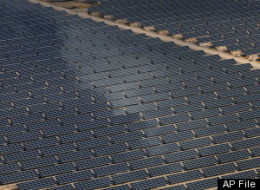
The $6 billion project is being developed by Solar Millennium, a German solar developer. At peak output, the solar farm could generate enough clean electricity to power more than 300,000 homes, according to project developers.  Source:  huffingtonpost


make your own solar panels


Join The Green Club


Green Business Network: Connect, Market, and Grow

Share

Thursday, October 21, 2010

Kohl’s, Motorola, TD Bank, Whole Foods Named as EPA Green Power Partners of the Year

The U.S. Environmental Protection Agency (EPA) has announced the winners of the agency’s 10th annual Green Power Leadership awards that honor 18 Green Power Partners in four categories: Green Power Partners, Green Power Purchasing, On-Site Generation, and new this year, Green Power Community of the Year.

Together, these award winners are using more than 5 billion kilowatt-hours of green power annually, equivalent to the annual carbon dioxide (CO2) emissions of more than 700,000 vehicles, according to the EPA.

EPA has named Kohl’s Department Stores, Motorola, TD Bank, and Whole Foods Market as Green Power Partners of the Year for their achievements in using green power and cutting GHG emissions.

Here’s why these four companies top the list.

Kohl’s increased its green power purchase from 2009 to 2010 by 60 percent from approximately 850 million kilowatt-hours (kWh) to more than 1.3 billion kWh, achieving 100 percent green power use. Kohl’s also tops the EPA’s Top 20 Retail List and National Top 50 Purchasers List.

Kohl’s is one of the world’s largest retail solar hosts, with almost 100 solar systems activated in California, New Jersey, Wisconsin, and Connecticut. The company retains renewable energy certificates (RECs) for one-third of these installations. Ten additional systems are under construction. Kohl’s activated solar arrays provide 20 to 40 percent of the power to each store, generating approximately 15 million kWh of green power annually.

Motorola joined the Green Power Partnership in 2009 and has already increased its REC purchase by more than 50 percent, from approximately 78 million kWh to 119 million kWh. Motorola’s green power purchase represents more than 30 percent of its United States electricity use, which also earned the company a spot on the EPA’s National Top 50 Purchasers List.

In 2010, TD Bank purchased more than 240 million kilowatt-hours RECs. These wind-derived RECs supply 100 percent of the bank’s electricity needs. TD Bank’s purchase ranks among the top 20 in the Green Power Partnership.

Whole Foods Market was the first Fortune 500 company to purchase wind power for 100 percent of its electricity use across its United States operations, according to the EPA. In 2010, the retail chain increased its purchase to 815 million kilowatt-hours of wind-based RECs. The retailer also topped the EPA’s National Top 50 Purchasers List and Top 20 Retail List.

While the majority of Whole Foods Market’s green power consists of RECs, green power is produced through solar systems located on a distribution center and 14 retail stores across the nation. The retailer also has installed fuel cell systems at two of its stores, and is installing a 100 percent bio-fuel generator at one of its commissaries, and is evaluating on-site wind.

Other winners by category include:

–Green Power Purchasing: BD, BNY Mellon, Carnegie Mellon University, Chicago Public Schools, Harris Bank, Indianapolis Zoo, Intel, Pearson, Port of Portland, and the State of Illinois

–On-site Generation: City of San Francisco and Phoenix Press

–Green Power Communities of the Year Award: Park City, Utah and, Corvallis, Oregon
Courtesy  of  Environmental Leader


make your own solar panels


Join The Green Club


Green Business Network: Connect, Market, and Grow

Share

Monday, October 18, 2010

Protecting Our Planet, Air Force Solar Energy Use On Rise

Air Force engineers are planning to outdo the 14.2-megawatt solar array spanning 140 acres at Nellis Air Force Base (AFB) in Nev., which has held the title of the largest renewable-energy project in the Air Force, with plans to build three new solar arrays by 2013 that are as big as or bigger than the Nellis project. In addition to Nellis AFB, Davis Monthan AFB and Luke AFB, both in Arizona, are planning expansive solar arrays.

Davis-Monthan AFB plans to purchase electricity from a 14.5-megawatt photovoltaic solar array to be built and operated by SunEdison on 130 acres of base property. The array is expected to deliver 35 percent of the energy needed to operate base facilities. The solar project initially was reported in June as being as big as 20 megawatts.

Luke AFB has teamed up with Arizona Public Service Company to build a 15-megawatt solar array on 100 acres of base property, which was originally estimated at 17-megawatts. The project could produce enough energy to satisfy 50 percent of the base’s energy needs and save up to $10 million on utility bills over 25 years.

In addition, Air Combat Command and Nellis AFB leaders have plans to construct a 17-megawatt phase-two project in 2012 to add to the 14.2-megawatt array built in 2007.

Earlier in October, the U.S. military announced plans to use renewable sources for 50 percent of its power by 2020, with the Marines leading the charge in the battlefield, reports Popular Science.

The 150 Marines of Company I, Third Battalion, Fifth Marines are the first to bring renewable energy tech including solar panels, solar chargers and solar tents to a battle zone, reports Popular Science. The military hopes this will serve as a model for the future.

Last year, the U.S. military launched several “green” initiatives including solar and wind projects that officials estimate could save millions, reduce their environmental footprint and save lives in war zones where fuel convoys are frequent targets.  Courtesy of Environmental Leader


make your own solar panels


Join The Green Club


Green Business Network: Connect, Market, and Grow

Share

Saturday, October 16, 2010

Wal-Mart to boost buying from small and local farms


Wal-Mart Stores Inc. is planning to double the sales of fresh produce from local farms in its United States stores by the end of 2015, part of a strategy to revamp its global produce supply chain.

The world's largest retailer said it would also sell more than $1 billion each year in food from one million small and medium-sized farms in emerging markets by the end of 2015. That would help increase income for those farmers 10 percent to 15 percent in the same time frame, Wal-Mart said.

In the United States, Wal-Mart said its plans for supporting local agriculture would lift local produce to 9 percent of total produce sales in the country. Wal-Mart does not give a dollar figure for total produce sales.

Wal-Mart also said it will require that palm oil from sustainable sources be used in all of its private-label products by the end of 2015. The company sells hundreds of products that use palm oil. Environmentalists argue some producers add to global warming by felling forests.

Using locally sourced agriculture and supporting small farms is one way to preserve local jobs and prevent dwindling farmland from being lost, according to environmentalists and other groups. It can also help reduce the use of resources such as fuel to transport food over long distances.

Wal-Mart joins a growing list of corporate and charitable organizations lending support to sustainable agriculture programs and small and local farmers.

Backers of such programs include the United States Agency for International Development, the Bill and Melinda Gates Foundation and a host of corporations, including DuPont and Archer Daniels Midland.

The focus comes as the United Nations warns that the global population is estimated to jump roughly 50 percent to 9.2 billion by 2050, which will require broad public and private initiatives to boost agricultural productivity and nutrition without use of additional environmental resources.

"Wal-Mart, they are a very big outfit. If they require their suppliers to meet sustainability requirements, that will have significant implications," said Bill Lesher, executive director of the Global Harvest Initiative consortium of corporations focused on increasing agricultural production.

"It will benefit large farmers, small farmers, it will be helpful to everyone," Mr. Lesher said.

Wal-Mart has sought to reduce the environmental harm posed by its business by pushing suppliers to cut package sizes and encouraging consumers to buy energy-efficient light bulbs. It has also cut down on fossil fuels in its supply chain.

The moves have helped Wal-Mart improve an image tarnished by accusations of unfair treatment of employees and the threat its stores pose to small local retail businesses.

As part of the plan announced on Thursday, Wal-Mart said it will spend more than $1 billion on improvements in its global fresh supply chain to move fresh food to stores more quickly.

Wal-Mart aims to reduce food waste in emerging market stores by 15 percent and in stores in other markets 10 percent by 2015.

The company is also looking to help protect the Amazon rainforest by only buying beef from producers that do not contribute to deforestation, Wal-Mart said.

The Brazilian government, at the prompting of conservationists, has cracked down in recent years on slaughterhouses that buy cattle raised on illegally deforested pasture in the Amazon. The industry has been slowly moving toward ear-tag chips to expand traceability to most of the country's roughly 200 million head of cattle.

The plans were announced by Wal-Mart chief executive Mike Duke at the company's sustainability milestone meeting.  Courtesy of ECOSEED


make your own solar panels


Join The Green Club


Green Business Network: Connect, Market, and Grow

Share

Monday, October 11, 2010

Starbucks Moves Ahead with ‘Green’ Strategy despite Cost

As the U.S. Department of Energy (DOE) releases an energy-savings guide to help quick-service restaurants reduce their energy use by 50 percent, Starbucks continues to move ahead with plans to make the restaurant chain’s stores environmentally friendly.

Starbucks is part of a growing trend by retailers to reduce their impact on the environment despite the initial cost premium for their efforts, reports The Washington Post.

About 1,300 retail locations have enrolled in the U.S. Green Buildings Council’s Leadership in Energy and Environmental Design (LEED) certification program through September, compared with 900 for all of last year, and represent about eight percent of all 6,000 buildings that are LEED certified, according to The Washington Post.

Starbucks strategy calls for 50 percent of its energy to come from renewable sources and to achieve LEED certification for all of its “ground-up” sites worldwide. The company is one of several working with USGBC on a new certification program that offers operators the option of pursuing the designation for multiple properties at once, reports The Washington Post.

Starbucks will build or renovate 10 test stores around the world as part of the test program.

Starbucks would not reveal to the newspaper how much the green retrofits cost other than noting “it has been pricey.” However, the restaurant chain expects to achieve a full return on investment for these projects in a few years.

To help restaurants reduce their energy consumption, the DOE and its Pacific Northwest National Laboratory (PNNL) have released a technical report that provides recommendations on how to achieve up to 50 percent energy savings in quick-service restaurants.

The guide, “Technical Support Document: 50% Energy Savings for Quick-Service Restaurants” (PDF), provides a number of energy-efficiency measures that cut energy use in quick-service restaurants by up to 50 percent compared to a baseline standard in less than five years. The 50 percent goal covers the reduction of site energy use in all eight U.S. climate zones.

PNNL used EnergyPlus, an energy simulation program, to determine the energy savings provided by the energy-efficiency measures. The prototype 2,500-sq.-ft. building model was analyzed across all U.S. climate zones, which were divided into 16 representative climate cities.

The report also provides an estimate of the incremental first costs and simple payback years.

Some of the energy-efficiency measures include the following:

–Ultra-efficient cooking appliances that reduced kitchen exhaust air flow

–An optimized HVAC system configuration to better utilize a dedicated outdoor air system and runaround coil loop heat recovery

–Efficient exterior and interior lighting with dimming controls in the dining room

–Enhanced insulation, cool roofs, and high-performance window glazing

The DOE says the 50 percent savings report will provide the foundation for the next series of Advanced Energy Design Guides (AEDGs), which are “how-to” guides that show architects, engineers, and building designers how to achieve above-code energy performance for buildings using existing technologies available today.

The American Society of Heating, Refrigerating and Air-Conditioning Engineers (ASHRAE) works in collaboration with DOE, the American Institute of Architects, the Illuminating Engineering Society, and the U.S. Green Building Council to develop and publish the free design guides.

The DOE has published guides in several categories for commercial buildings. For example, in September, DOE and its National Renewable Energy Laboratory (NREL) released two technical reports that provide recommendations on how to achieve 50 percent energy savings in new and existing large office buildings and large hospitals.   Courtesy of Environmental Leader


make your own solar panels


Join The Green Club


Green Business Network: Connect, Market, and Grow

Share

Friday, October 8, 2010

IKEA Claims Largest Retail Rooftop Solar Installation in Canada

IKEA Canada claims its new solar initiative will make it the first retailer to exclusively own, install and operate what will be the largest rooftop solar panel network in Ontario under the feed-in tariff (FIT) program. The retailer will invest $4.6 million to install rooftop solar panels at three of its Ontario stores in Etobicoke, North York and Vaughan. They are expected to be fully operational by the end of the year.

IKEA Canada says it will currently own what is believed to be the largest rooftop solar installation by a retailer in Canada.

In total, the three stores will install 3,790 solar panels, which will generate a total of about 960,000 kWh per year of renewable energy that will be fed back into the grid.

IKEA Canada will use SANYO HIT Power solar panels and has selected AMP Solar for the installations at all three locations. The retailer has received contracts from the Ontario Power Authority and qualifies for the FIT program under Ontario’s Green Energy Act.

These Ontario installations will help IKEA meet its global commitment of 150 solar installations over the next three years. IKEA customers will have access to real-time energy production information, and will be able to quantify carbon emission reductions via in-store kiosks.

In the U.S., IKEA plans to install a solar energy system that will generate about one million kWh of electricity at its retail store in Tempe, Arizona. Scheduled to start in May, the 46,000-sq.-ft. installation will consist of two 300-kWh systems, each built with approximately 1,300 panels (for a total 2,600).

This is IKEA’s third solar project in the U.S. One system is operational in Pittsburgh, Pa., and the other installation is underway in Brooklyn, N.Y.    Courtesy of Environmental Leader


make your own solar panels


Join The Green Club


Green Business Network: Connect, Market, and Grow

Share

Thursday, October 7, 2010

Chili’s Touts Largest U.S. Roll-Out of LED Lamps

Chili’s Restaurant touts it is rolling out the largest U.S. installation of LED lamps, reports LEDS Magazine. The restaurant chain is in the process of installing 125,000 LED lamps for both interior and exterior lighting across all of its 827 restaurants. The installation is about 80 percent complete.

Brinker International, parent company of Chili’s Restaurants and Maggiano’s Restaurants, has recently installed LED lighting from Eco-story LED Lighting Solutions as part of a re-lamp project in all of its corporate restaurants, according to LEDS Magazine.

Eco-story claims this will be “the largest U.S. roll-out of LED lamp technology to date.”

Brinker estimates that the LED lighting installations will save about $87.00 per store/per week, which translates into a savings of more than $3.7 million annually for 827 stores, according to the article.

Kevin Falconer, Brinker’s senior director of design told LEDS Magazine that the LED lamps are also improving the look and ambiance of the Chili’s restaurants. The lamps emit a warm-white light with a color temperature of 2700K, and are built using Cree XLamp LEDs.

A variety of lamp types have been retrofitted including the replacement of older lamps ranging from 30 W to 50 W with 4.9 W LED MR16s. Also replaced were 60 W PAR20 and PAR30 lamps with 6 W LED products. The restaurants also replaced candle bulbs and indoor/outdoor globe lights.

Other restaurant chains that have made the switch to LED lighting to save money and cut energy use include Applebee’s and Red Robin Restaurants.  Courtesy of Environmental Leader


make your own solar panels


Join The Green Club


Green Business Network: Connect, Market, and Grow

Share

Tuesday, October 5, 2010

Solar Power Coming to the White House

Solar panels and a solar hot water heater will soon be installed at the White House, Energy Secretary Steven Chu said Tuesday.

Chu announced the conversion at the 2010 GreenGov Symposium in Washington, accompanied by Nancy Sutley, chairwoman of the Council of Environmental Quality.


"This project reflects President Obama's strong commitment to U.S. leadership in solar energy and the jobs it will create here at home," Chu said in a written statement released by the Energy Department. "Deploying solar energy technologies across the country will help America lead the global economy for years to come."

By installing the solar panels on the White House, Sutley said the president is underscoring a commitment to "lead, and the promise and importance of renewable energy in the United States."

The solar panel system, which should be installed by next spring, will convert sunlight directly to electricity, while the solar hot water heater will have a solar collector facing the sun to heat water for use in the White House residence. The Energy Department said a competitive procurement process will be used to select the company that will make the installations.

This is not the first time solar energy has been tapped at the White House. Former President Jimmy Carter had solar panels installed on the roof of the White House residence during his term. They were removed during the Reagan administration. Former President George W. Bush also used solar energy to help power a maintenance building on the White House grounds, and to assist in heating the swimming pool there.

The announcement comes on the one-year anniversary of an executive order signed by the president that called on the federal government to lead in the establishment of a clean energy economy.
Courtesy of CNN


make your own solar panels


Join The Green Club


Green Business Network: Connect, Market, and Grow

Share